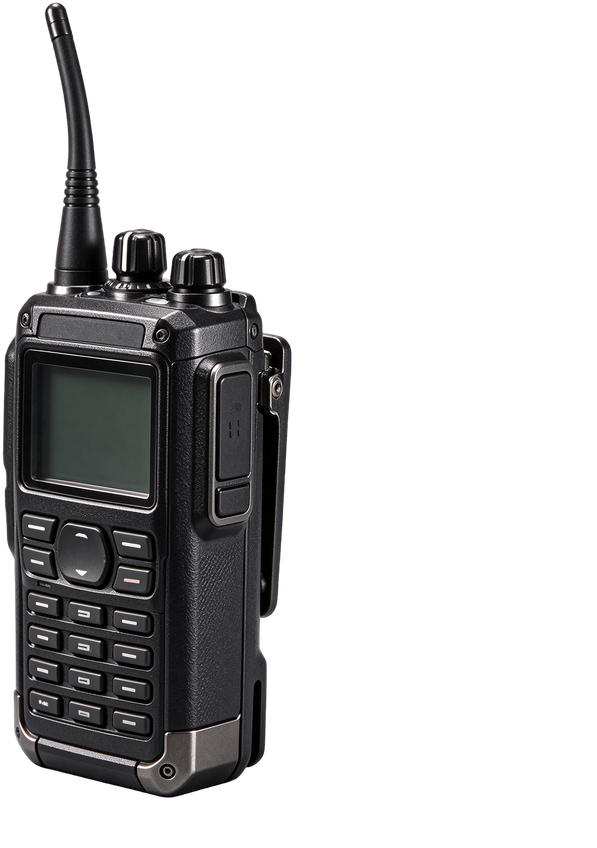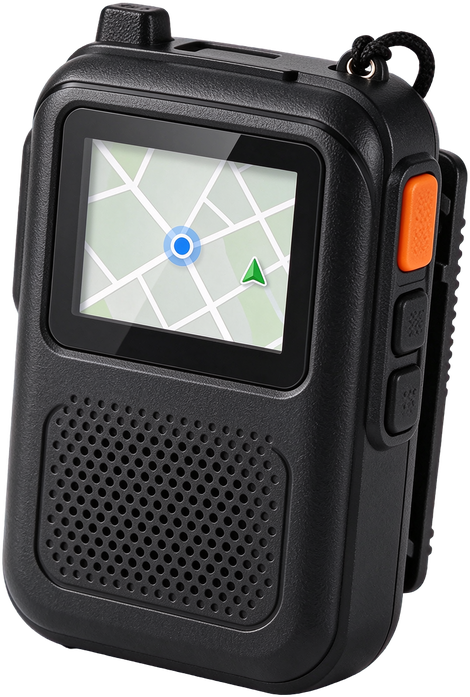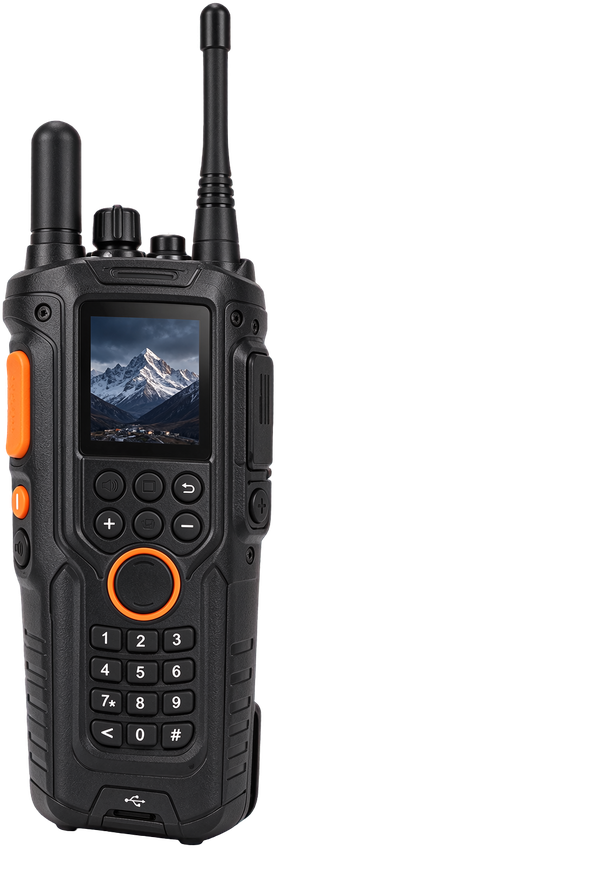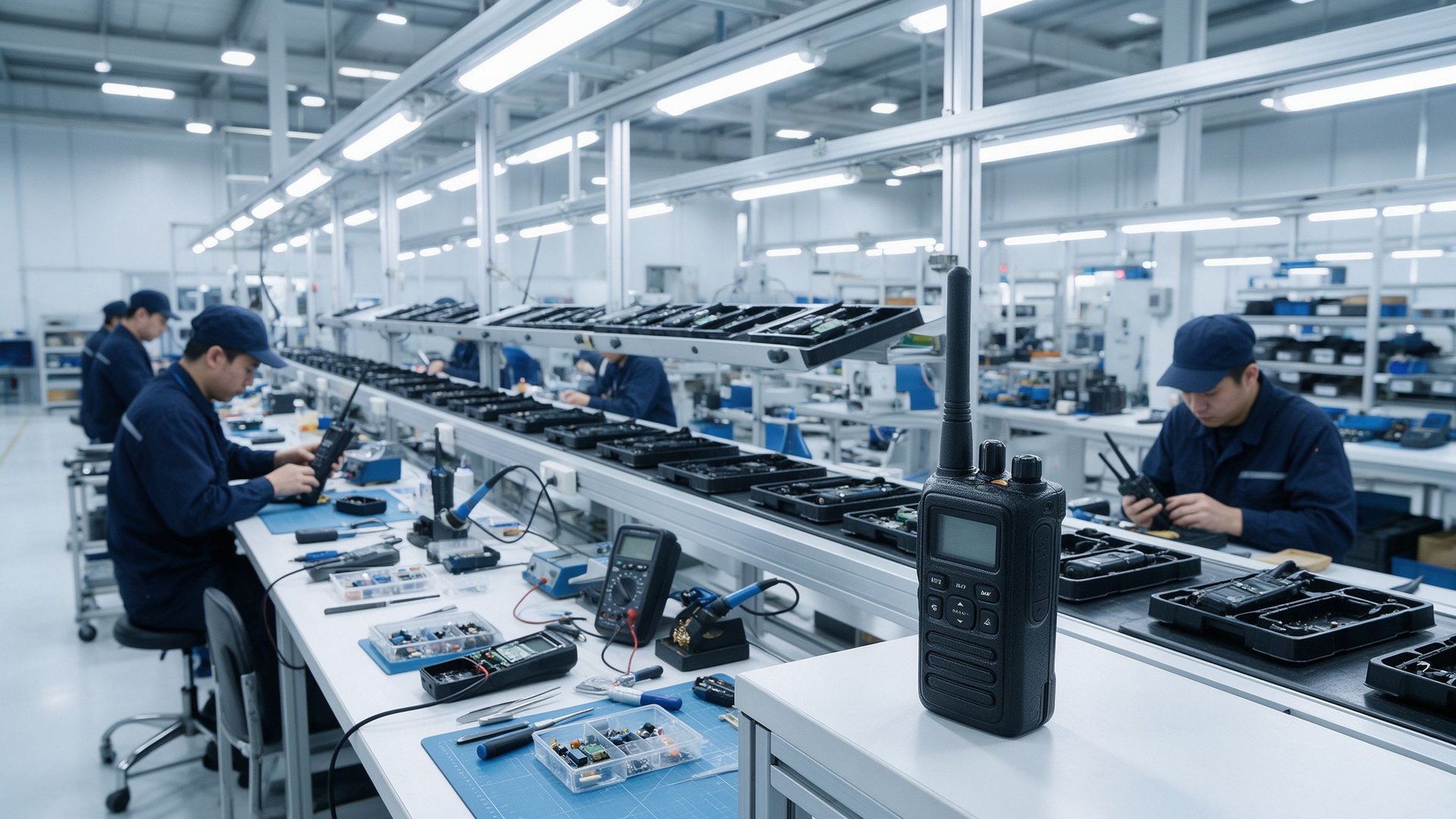
Every week a dealer asks us the same question in a different form: "should we sell POC or DMR to this customer?" The honest answer is that the two technologies do not compete — they solve different cost problems. This article lays out the three options we actually ship, what each costs to own, and where each one fails.
1. What each technology really is
Analog UHF is a continuous carrier with a voice signal on top. One channel, one conversation. It is cheap, universally understood, and still the default for small shops, farms and schools.
DMR Tier II is digital, and its key trick is two-slot TDMA: two conversations share one 12.5 kHz channel. You get double capacity on the same licence, plus caller ID, encryption and text messaging. It needs a repeater and a frequency licence in most countries.
POC (public network / push-to-talk over cellular)
2. The cost comparison nobody prints
| Item | Analog | DMR Tier II | POC (4G) |
|---|---|---|---|
| Handset | Lowest | Mid | Mid |
| Infrastructure | None (or one repeater) | Repeater + combiner + install | None |
| Licence | Usually required | Required | None (data SIM only) |
| Running cost | Near zero | Near zero after install | Per-seat platform fee + data |
| Coverage | Site + repeater radius | Site + repeater network | Anywhere with mobile data |
| Failure mode | Interference, congestion | Repeater downtime, coverage holes | Dead zones, platform outage, SIM issues |
The trap is comparing handset prices. A DMR fleet has a fixed infrastructure cost that dominates at small volumes and disappears at large ones; POC has a running cost that looks trivial per seat and becomes the largest line item after three years. Model both over 36 months before you quote.
3. Where each one fails in the field
Analog fails quietly
Congestion and interference do not announce themselves. On a site with 40 users and two channels, the fourth simultaneous call simply does not happen — people assume the radio is broken. Analog also has no privacy: anyone with a scanner hears everything.
DMR fails at the edges
Digital audio holds up further than analog, then falls off a cliff. Users describe it as "cutting out" at the boundary of a repeater's coverage. If your site has basements, lift shafts or steel-framed floors, budget a coverage survey rather than assuming the repeater reaches.
POC fails when the network does
Basements, tunnels, remote sites, disaster scenarios and roaming SIMs are the usual suspects. A POC fleet without a fallback is a fleet that stops working when the local carrier has an outage — which is exactly when a security or facilities team needs it.
4. The decision checklist
- Is the coverage area fixed and compact? If yes, DMR (or analog) is usually cheaper over five years.
- Do people move between cities, countries or sites? If yes, POC wins on coverage economics.
- Is confidentiality contractual? DMR with AES-128/256; POC only with platform-side encryption and device binding.
- Is there a regulatory constraint? Some markets restrict POC for security use, others restrict DMR frequencies. Check before quoting.
- Can the customer support a monthly invoice? POC is an operating expense; DMR is capital expense. Procurement departments often decide on this alone.
5. When dual-mode is the right answer
Dual-mode handsets keep a DMR bearer for on-site work and fall back to 4G outside the fence. It is the correct choice when a crew works inside a plant and across a city on the same shift — utilities, logistics, municipal services. It costs more per unit, but it removes the two most common failure modes above, and it keeps one talk group instead of two.
If you are sizing a fleet and want a second opinion, send us the site plan and headcount per shift. We will model the three options with your volumes and come back with a recommendation, whether or not you buy from us.