
Dispatch visibility
Fleet & Logistics
Dispatchers, yard crews and drivers on one talk group — with GPS on the map and no per-call phone charges.
- Yard-to-highway coverage in one group
- GPS position reporting every 30 s
- Dash-mount kits and 12 V charging
- Recording for incident review
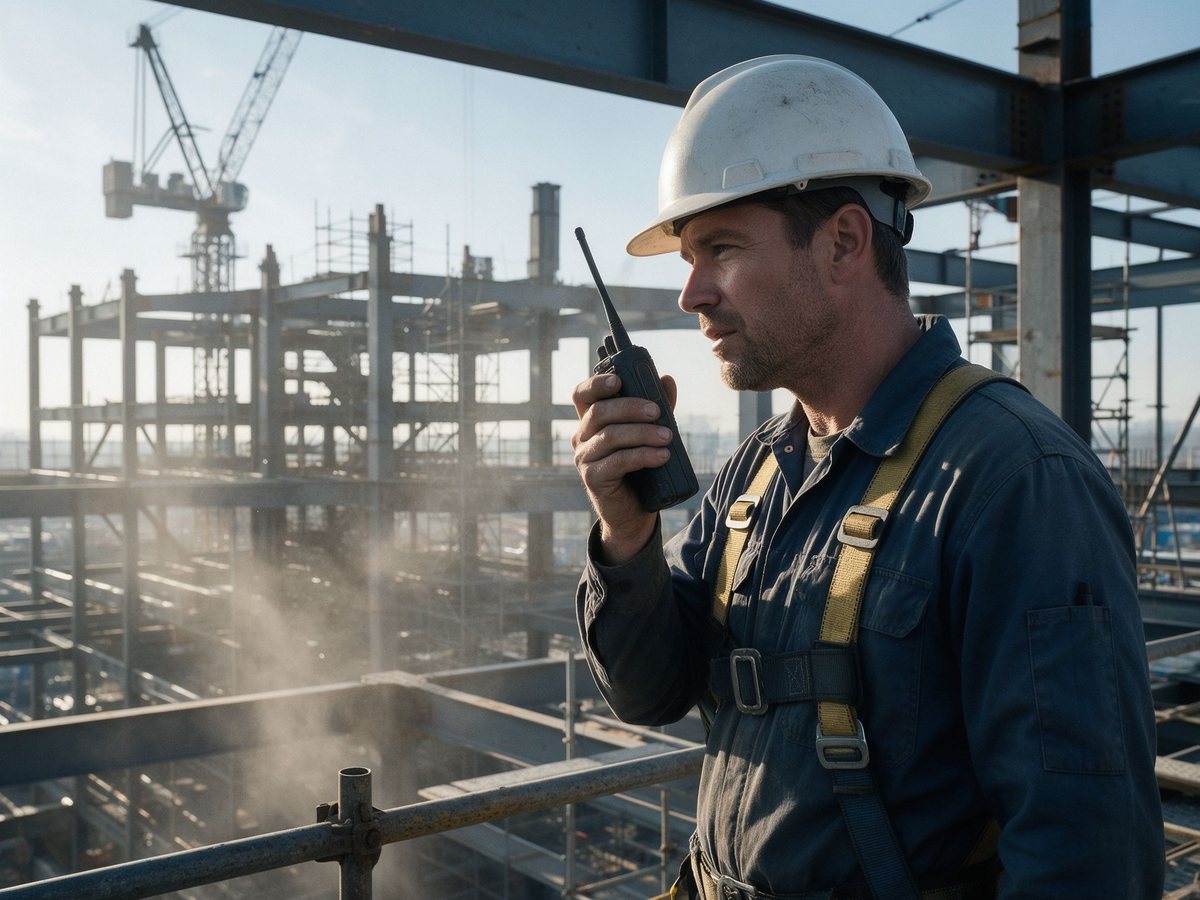
Dust, noise, height
Construction & Site
IP67 sealing, 105 dB audio and a battery that outlasts the shift — plus DMR where no mobile coverage reaches.
- IP67 and 1.5 m drop tested
- Noise-cancelling boom mics
- Man-down and SOS alerting
- Intrinsically safe variants on request

Patrols and front desk
Property & Security
Discreet mini and ear-hook radios for guards and housekeeping, with a dispatcher view of every post.
- Badge-size radios, no visible antenna
- Silent earpiece options
- Patrol check-in and GPS trail
- Multi-site talk groups
Guest-facing teams
Hospitality & Retail
Front desk to housekeeping to kitchen — short, quiet calls that guests never hear.
- Ear-hook form for housekeeping
- Channel-per-department layout
- Shift handover recordings
- Retail-ready packaging for resale

Beyond the cell grid
Outdoor & Events
Hiking, riding, rally and event crews — lightweight POC where there is signal, DMR where there is not.
- 34–118 g carry weight
- 72 h standby on the mini platform
- IPX4 splash resistance
- Event rental kits with multi-bay docks
Wide-area crews
Utilities & Field Service
Gas, water, power and telecom crews working across a city — dual-mode radios keep the talk group alive between sites.
- DMR on site, 4G between sites
- AES-256 encryption
- Lone-worker check-in
- Tender documentation pack