"Up to 10 km range" is the least useful number on a walkie-talkie box. It is measured line-of-sight, on water, with nothing in between. In a forest, in a valley, or inside a vehicle, the real number is often under one kilometre. Here is what to look at instead.
Range is about terrain, not watts
Going from 1 W to 5 W buys you roughly 40% more distance in free space — not the tenfold that the packaging implies. What actually matters is what stands between the antennas: rock, trees, steel, hills. Two rules of thumb:
- Line of sight: VHF travels further; UHF penetrates buildings better.
- Anything in the way: add a repeater, or move to a network-based radio (POC) where the "range" question disappears.
Battery: hours are a duty-cycle fiction
A 12-hour rating usually assumes 5% transmit, 5% receive, 90% standby. A hiking group chatting constantly will drain a 1800 mAh pack in half that time. For outdoor use, look for 3000 mAh and above, USB-C charging (so a power bank works), and a spare pack rather than a bigger single one.
Water and dust: IPX4 is not IP67
IPX4 survives rain. IP67 survives being dropped in a stream and retrieved. If your use is hiking or riding in wet climates, do not accept IPX4 as "waterproof" — it is splash resistance. Also check the charging port: a sealed USB-C cover is the usual point of failure after a season outdoors.
Weight and how you carry it
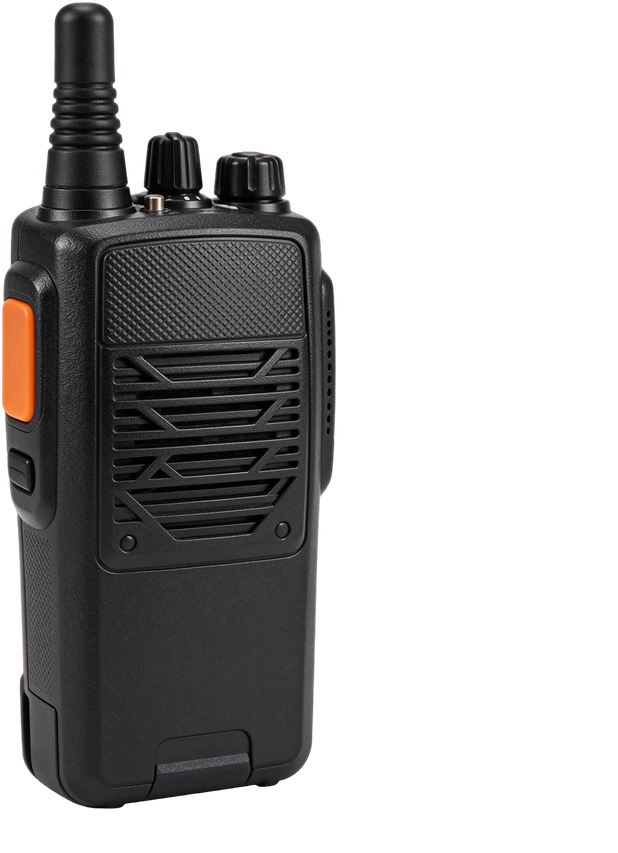
- Handheld (200–310 g): best audio and battery; needs a pocket, chest harness or molle clip.
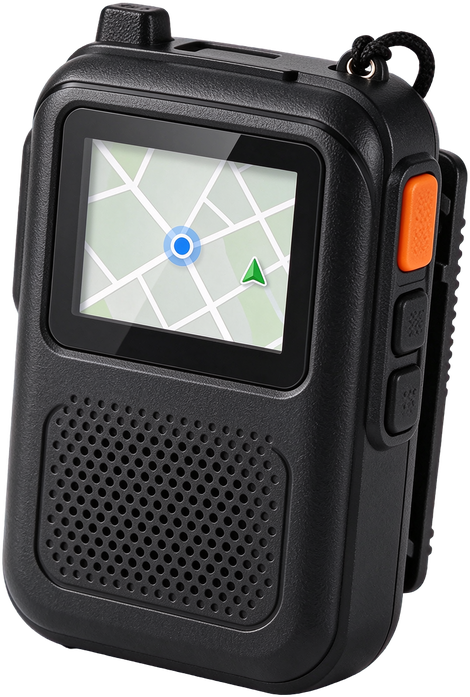
- Mini POC (under 120 g): clips to a strap, barely noticed; ideal for hiking and riding.
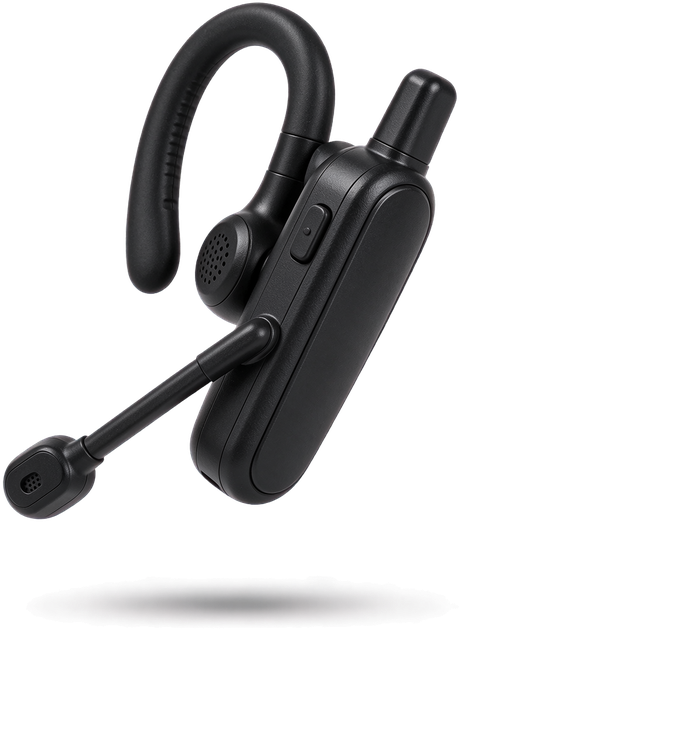
- Ear-hook (about 35 g): hands-free and helmet-friendly; shorter battery life, so charge at camp.
What to buy for three common outdoor jobs
| Use | Best fit | Why |
|---|---|---|
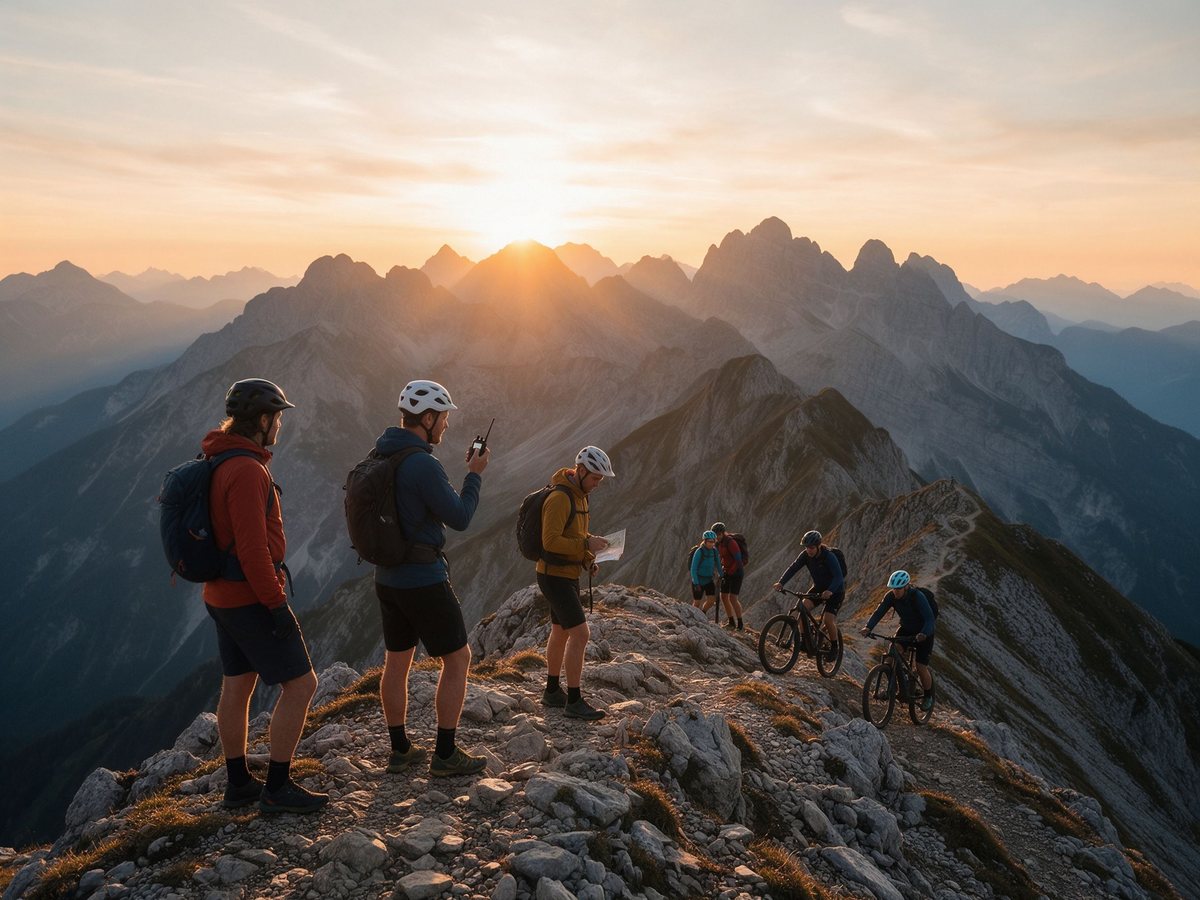
| Hiking / trekking group | Mini POC + power bank | Light, unlimited range while there is signal, 72 h standby |
| Mountain biking / rally support | Ear-hook POC under a helmet | Hands-free, no cable snagging, low weight |
| Remote area with no mobile signal | Analog or DMR UHF | Works with no network at all; bring a spare battery |
Three things to check before you leave
Charge everything the night before and take one spare pack per radio. Test the talk group at the trailhead, not on the ridge. And write the channel or group name on a strip of tape on each radio — in a group of eight, the person who cannot remember which group they are in is the person who goes missing from the conversation.
If you tell us the terrain, group size and trip length, we will point you at one model rather than a catalogue. Retail orders ship in 3–7 days; bulk orders to dealers start at 50 pcs.